My shopping cart
Your cart is currently empty.
Continue Shopping
Italian doors represent the pinnacle of architectural design, merging centuries of craftsmanship with hidden engineering for a seamless, modern interior aesthetic.
When you walk into a high-end European residence, the doors often feel like an extension of the architecture rather than a mere functional necessity. This is the hallmark of Italian design. In the world of interior architecture, doors are the most touched and frequently used elements of a home. They provide the tactile transition between spaces, and when they are engineered with Italian precision, that transition becomes an experience of quiet luxury and mechanical perfection.
Italian interior doors stand apart from standard domestic options because they are treated as pieces of fine furniture. Every component, from the hidden frame to the magnetic latch, is designed to contribute to a cohesive, minimalist aesthetic. For architects and homeowners alike, understanding the nuances of European craftsmanship is essential for elevating a project from "standard" to "bespoke."
The Italian approach to door design is rooted in the concept of "less is more," but with a significant emphasis on material quality. Unlike standard doors that rely on heavy casings and visible hinges to mask structural gaps, European interior doors prioritize clean lines and architectural integration.
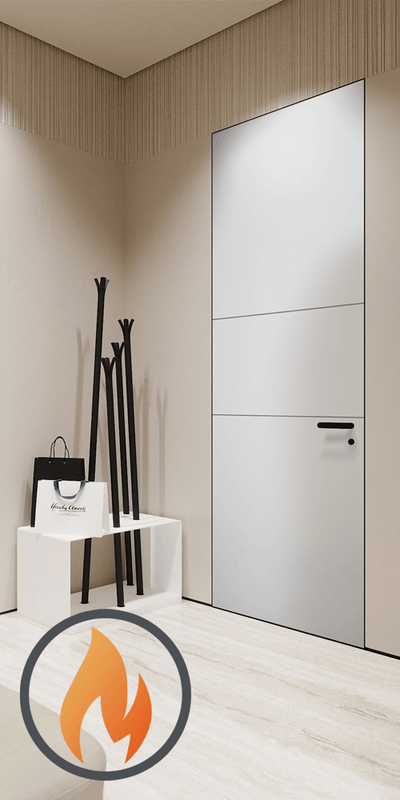
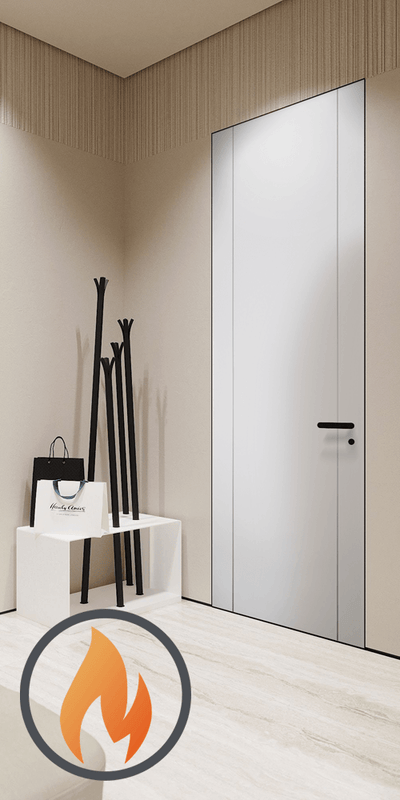
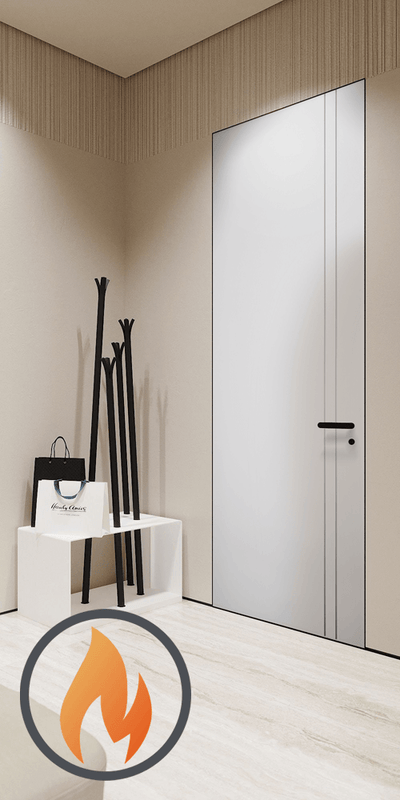
The most significant technical advancement in European interior doors is the hidden frame system. In a traditional setup, you have a wooden jamb covered by decorative molding (casing). Italian engineering eliminates the casing entirely.
a. Aluminum Jamb Technology
The secret to a flush-to-wall door lies in the aluminum frame. These frames are designed to be plastered directly into the wall during the drywall phase. This creates a structural opening that is perfectly square and rigid, allowing the door to sit with a gap of only 2-3 millimeters from the wall.
b. Structural Stability
Because the frame is made of high-grade extruded aluminum, it does not warp, shrink, or expand like traditional timber frames. This ensures that the tight tolerances required for a "hidden" look remain perfect for decades.
c. Versatility of Opening
These frames are engineered to allow the door to open "push" or "pull" while maintaining the flush look on the exterior side. This allows you to keep a consistent hallway aesthetic even if some doors open into rooms and others open toward the corridor.

The hardware used in Italian doors is as much a feat of engineering as the door itself. When you specify swing doors from a premium European supplier, you are moving away from traditional pin hinges and toward 3D adjustable concealed systems.
Italian craftsmanship is synonymous with material honesty. Whether it is a natural wood veneer or a multi-layered lacquer, the finish is applied with a level of precision that is difficult to replicate in on-site finishing.
a. Natural Wood Veneers
Italian manufacturers source premium hardwoods like Ash, Oak, and Walnut. These are sliced into thin veneers and "book-matched" so the grain flows seamlessly across the entire door face. This technique ensures that each door is a unique piece of art.
b. Italian Lacquer Finishes
The lacquering process in Italy is an industrial art form. Doors undergo multiple layers of primer, color, and protective topcoats in dust-free factory environments. The result is a surface that is incredibly durable and available in matte, satin, or high-gloss sheens. The "soft-touch" matte finishes are particularly popular in modern design for their fingerprint resistance and velvety texture.
c. Embossed and Textured Surfaces
Modern Italian design often experiments with three-dimensional textures. Using CNC routing, designers create "embossed" patterns, linear grooves, geometric shapes, or organic ripples, that add a layer of visual and tactile interest to a room.

Italian engineering has revolutionized how doors move through space. If you are dealing with a tight floor plan or a wide architectural opening, traditional swing doors may not be the best solution.
For the professional trade, the beauty of an Italian door is secondary to its technical reliability. When you specify these products, you are working with a system designed for high-performance environments.

Choosing the right door often comes down to solving specific spatial or aesthetic problems.
The Problem: "My hallway feels cluttered with too many frames and casings."
The Solution: Switch to a hidden frame system. By removing the visible trim, you create a "gallery look" where the walls appear as continuous surfaces. This reduces visual noise and makes a narrow hallway feel significantly wider.
The Problem: "I want a modern look, but I'm worried about the door slamming or being noisy."
The Solution: Opt for Italian doors with magnetic locks and integrated rubber gaskets. The gaskets provide an airtight seal when closed, which not only dampens sound but also prevents the "clatter" of wood hitting wood.
The Problem: "I have a beautiful view, but I need to close off the room occasionally."
The Solution: Use a glass-paneled sliding system. Italian glass doors use slim aluminum profiles and tempered safety glass, allowing light to flow through the home even when the door is closed for privacy or climate control.
While the initial investment in European interior doors is higher than mass-market options, the long-term value is undeniable. A home's value is often determined by its finishes. High-quality doors are a "permanent" furniture piece that defines the quality of the build.

Italian interior doors are more than just a way to close off a room; they are a masterclass in how form and function can exist in perfect harmony. By prioritizing hidden engineering, premium material selection, and precision hardware, these doors provide a level of sophistication that standard doors simply cannot match. Whether you are an architect looking to maintain the purity of a minimalist floor plan or a homeowner wanting to bring a touch of European elegance to a renovation, the "Made in Italy" stamp remains the gold standard for quality.
When you invest in these systems, you aren't just buying wood and hinges, you are buying a piece of architectural heritage, refined by decades of innovation and a relentless pursuit of design excellence.
A: Yes, but it requires a "rough-in" phase. Since the aluminum frame must be plastered into the wall, you will need to remove the existing drywall around the door opening to properly secure the frame to the studs before finishing the wall again.
A: Magnetic locks offer two main benefits: aesthetics and acoustics. Because there is no protruding latch bolt, the edge of the door looks clean when open. Functionally, it is much quieter because the magnet only engages at the last millisecond of closing, eliminating the harsh clicking sound of mechanical latches.
A: While many European doors come in "standard" sizes, the true advantage of Italian craftsmanship is the ability to order custom sizes. We recommend providing your rough opening dimensions so the doors can be engineered to fit perfectly without excessive shimming.
A: Maintaining these finishes is simple. Because the lacquer is factory-cured and non-porous, you only need a soft, damp microfiber cloth for cleaning. Avoid harsh chemicals or abrasive sponges, which can dull the sheen over time.
A: 3D hinges allow you to adjust the door left/right, up/down, and forward/backward. This is crucial for "flush" doors where the gap between the door and the wall must be perfectly uniform (usually 2-3mm). Standard hinges do not allow for this level of precision after installation.
Trade Program
Are You a Trade Professional?
Architects, designers, and contractors receive exclusive pricing and dedicated project support.
Learn About Trade Pricing →Get Started
Our team can help with product selection, sizing, and specification — at no charge.


