My shopping cart
Your cart is currently empty.
Continue Shopping
Most people think of a door as a simple utility, a way to get from Room A to Room B. But as a designer, I see a door as the most frequently used piece of furniture in your home. It’s a tactile point of contact that sets the tone for your entire interior. When you walk through a high-end hotel in Milan or a luxury loft in Manhattan, there is a specific feeling of "solidness" and "silence" that you don't get in standard residential construction.
That feeling is the result of Italian engineering secrets that many contractors and standard suppliers simply don't talk about. Whether you are looking for modern interior doors for a renovation or a statement pivot front door for a new build, understanding what happens behind the finish is the key to a luxury result.
In this guide, I’m pulling back the curtain on European door manufacturing. We will explore why Italian craftsmanship is the gold standard, the technical "invisible" features that make a door feel premium, and how you can use specialized door systems to solve your most difficult layout problems.
The first secret experts won't tell you is that a luxury door isn't just about the wood or the lacquer; it's about the engineering inside the leaf and the frame. In the United States, standard doors are often hollow-core or made of lightweight materials that feel "flimsy" when you swing them. Italian doors, however, are treated as architectural components.
A premium European door typically features a solid core or a specialized honeycomb structure designed for acoustic dampening. When you close an Italian door, it shouldn't "clatter." It should have a muted, decisive "thud." This is achieved through:
If your door slams or clicks loudly, it lacks modern European hardware. Experts prioritize Italian-made magnetic locks (often from brands like AGB). These locks use a magnetic latch that only extends when the door is fully closed, meaning there is no protruding metal "tongue" to scrape against the strike plate or snag your clothes. It is silent, sleek, and virtually maintenance-free.
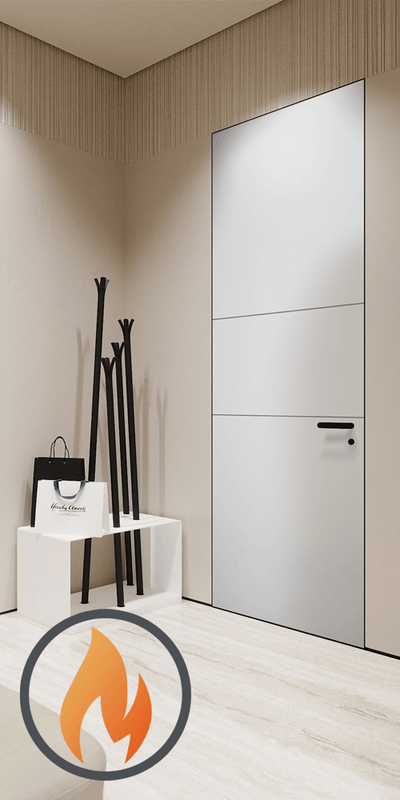
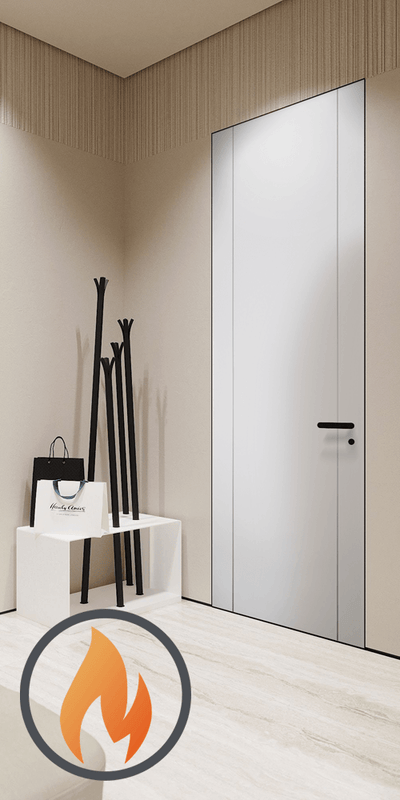
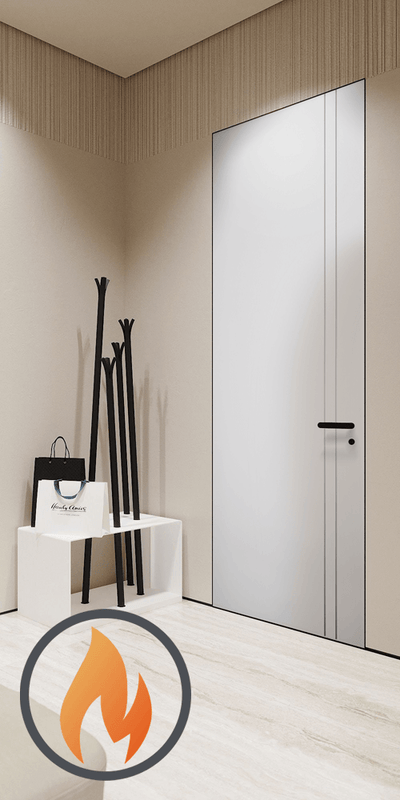
If you’ve ever scrolled through an architectural magazine and wondered how they make doors look like they are part of the wall, you are looking at hidden frame doors (often called Filomuro in Italy).

Standard doors require bulky casings and trim to hide the gap between the wall and the door frame. A hidden frame system eliminates the trim entirely. The frame is installed during the drywall phase, allowing the wall finish to come right up to the edge of the door leaf.
Designer Tip: You can paint or wallpaper these doors to match your walls exactly. This creates a "hidden room" effect and makes small hallways feel significantly longer and less cluttered. You can find these high-performance options in our custom interior doors and frames collection.
The real "magic" of a hidden frame door is the hinge. Italian doors utilize concealed hinges that are entirely invisible when the door is closed. More importantly, these hinges are 3D-adjustable. This means your contractor can calibrate the door's position, up/down, left/right, and in/out, with sub-millimeter precision. As your house settles over time, a simple turn of an Allen wrench keeps the door perfectly aligned.
One of the biggest mistakes I see homeowners make is choosing a standard swing door for a tight space. In European design, where urban space is at a premium, we rely on advanced sliding systems that look as good as they function.
A pocket door shouldn't be a rickety, noisy panel that falls off its track. High-end Italian pocket systems use heavy-duty aluminum tracks and soft-close mechanisms. This ensures the door glides with a single finger and never "slams" into the wall. These are perfect for master suites or laundry rooms where you want the door to "disappear" when not in use. Explore our sliding bedroom doors for inspiration on how to integrate these into your layout.
Forget the "rustic farmhouse" look for a moment. Barn doors have gone high-end. We now use sleek, minimalist hardware with black or satin nickel finishes and glass panels to maintain light flow. A modern barn door with glass can divide a home office from a living room without making the space feel dark or closed off.
For closets and wide openings, bi-fold doors and bypass systems provide the best access. The key here is the "bottom-trackless" design. Traditional bi-folds often have ugly floor tracks that collect dust. Italian-engineered systems are top-hung, leaving your flooring continuous and seamless. You can view these sleek options in our bi-fold doors collection.
The front door is your home's handshake. While many people settle for standard fiberglass or steel, the elite choice for modern architecture is the pivot front door.

Unlike a standard door that hangs on side hinges, a pivot door rotates on a single axis at the top and bottom. This allows for much larger, heavier, and more dramatic doors, sometimes up to 6 or 7 feet wide.
Wrought iron pivot doors offer a level of security and "heft" that wood cannot match. When paired with large glass panes, they create a "light-enhancing" entryway that pulls natural light deep into your foyer while maintaining an imposing, luxury presence. If you are looking to elevate your curb appeal, our front doors collection features designs that prioritize both high-security and high-design.
When you buy a door from a big-box store, you are limited to their sizes and finishes. But when you work with European-style manufacturers, customization is the standard. Here is what you should be asking for to get that designer look:
If you are an architect, contractor, or interior designer, you know that the logistics of doors can be a headache. Sizing discrepancies, shipping delays, and lack of technical support can ruin a project timeline.
At My City Doors, we built our Trade Program to solve these pain points. We provide:
Whether you're working on a single luxury renovation or a multi-unit commercial development, our wholesale and commercial door services are designed to support the trade community.
Investing in high-quality doors is one of the most effective ways to increase the value and daily enjoyment of your home. To make the right choice, remember these three rules:
Your doors shouldn't just close a room; they should complete it.
Hidden frame doors (Filomuro) create a seamless, minimalist look by eliminating visible trim and casings. They use concealed, 3D-adjustable hinges that allow the door to sit perfectly flush with the wall, making it ideal for modern and contemporary designs where clean lines are a priority.
Yes, but they often require more precise installation. While many of our doors can be customized to fit standard US sizes, systems like hidden frames or pivot doors require specific framing preparation. We recommend consulting with our technical team during the framing stage of your project.
Generally, yes, but you must ensure the wall can support the weight of the track and the door. For heavier European solid-core doors, you may need additional blocking (studs) behind the drywall where the track is mounted.
Magnetic locks (like the AGB Mediana Polaris) use a magnet to retract the latch while the door is open. When the door closes, the magnet in the strike plate pulls the latch out. This eliminates the "clicking" noise of a mechanical latch and provides a much cleaner look on the edge of the door.
Pivot doors allow for much larger openings than traditional hinges can handle. They offer a "grand entrance" feel and can support heavy materials like wrought iron and thick security glass, making them both a design statement and a high-security option.
Trade Program
Are You a Trade Professional?
Architects, designers, and contractors receive exclusive pricing and dedicated project support.
Learn About Trade Pricing →Get Started
Our team can help with product selection, sizing, and specification — at no charge.


