My shopping cart
Your cart is currently empty.
Continue Shopping
Choosing the best modern interior doors involves more than selecting a color or handle. A door affects how your home feels, how rooms connect, how much light moves through the floor plan, and how efficiently you use available space.
Italian doors and other European interior doors are often valued for their precise detailing, refined finishes, and ability to combine architectural design with everyday function. However, craftsmanship alone does not determine the right choice. You also need to consider the opening system, privacy requirements, wall construction, finish, hardware, and installation conditions.
The best door is the one that supports your room’s purpose while fitting naturally into the larger design scheme. Use the guide below to compare the most important options before you order.
A modern interior door is typically defined by clean geometry, restrained detailing, and a close relationship between the door and the surrounding architecture. Instead of relying on decorative panels or traditional profiles, modern designs often use broad, uninterrupted surfaces and carefully integrated hardware.
That simplicity requires precision.
A small inconsistency in the frame, edge, finish, or alignment can be highly visible on a minimalist door. This is one reason Italian and European manufacturers are frequently considered when designers want a polished, seamless result.
When comparing modern interior doors, evaluate:
For a broad starting point, review the modern European interior doors collection.
Italian craftsmanship is often associated with a strong balance between design and technical execution. The focus is not simply on making a door attractive. It is on making the door function as part of the room’s architecture.
When comparing Italian doors with other European interior doors, look for the same measurable qualities rather than relying only on country of origin.
Minimalist doors depend on straight lines, consistent reveals, and accurate proportions. The gap between the door and frame should appear intentional and even. Hardware should sit neatly within the composition instead of becoming a distraction.
A premium finish should look consistent across the face, edges, and frame. Veneer grain should appear deliberate, while lacquer should have an even sheen without visible irregularities.
High-quality European systems often offer more than one standard size or opening type. This is important when working with tall openings, narrow corridors, unusual wall depths, or open-plan interiors.
Ask about the door’s core, acoustic performance, hardware compatibility, seals, installation requirements, and maintenance needs. Sophisticated design is valuable only when it performs reliably.
In other words, compare the complete door system. Do not compare a door slab against a fully integrated frame package and assume they are equivalent.

Finish terminology can be confusing because different manufacturers use similar words in slightly different ways. For modern European doors, three important directions are planar, blind, and embossed.
Each creates a different visual effect.
A planar finish is a smooth, flat surface with minimal visual interruption. It may be finished in matte lacquer, satin color, or a subtle veneer, depending on the design.
Choose a planar door when you want:
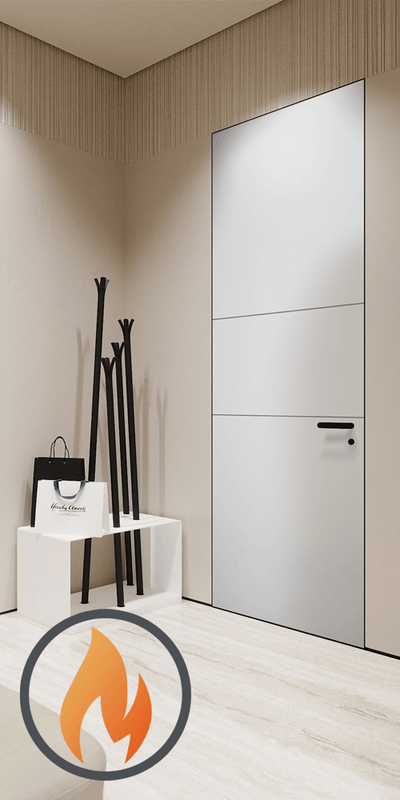
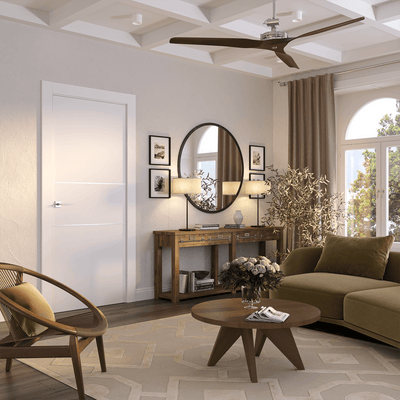
Planar doors are especially effective in hallways and open-plan spaces because they do not introduce unnecessary visual noise. A door finished in a color close to the wall can almost disappear, making the room feel taller and more continuous.
A flush planar door can also support a more architectural treatment when paired with a slim frame or concealed hinges. The result is controlled and sophisticated.
However, smooth surfaces show alignment and installation issues more clearly. Wall preparation matters. So does the quality of the paint or lacquer.
In the context of modern door design, blind commonly refers to a concealed-frame or hidden-frame treatment. It does not necessarily mean a door with a special opaque core.
The objective is to reduce the visual presence of the casing so the door sits more quietly within the wall. The frame may be recessed, integrated, or designed to receive the same finish as the surrounding surface.
Choose a blind or concealed-frame door when you want:
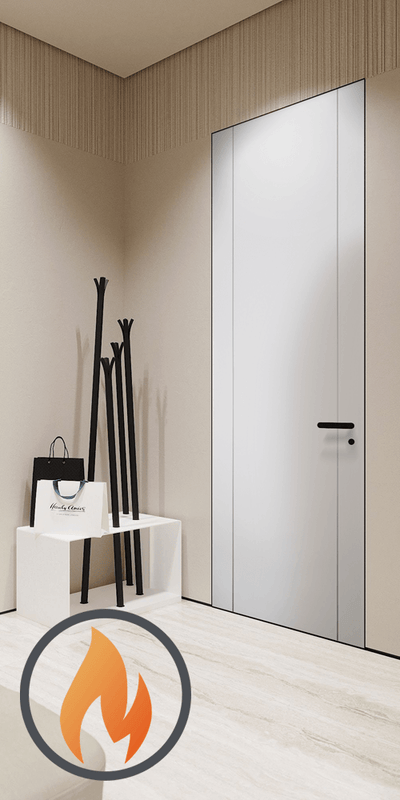
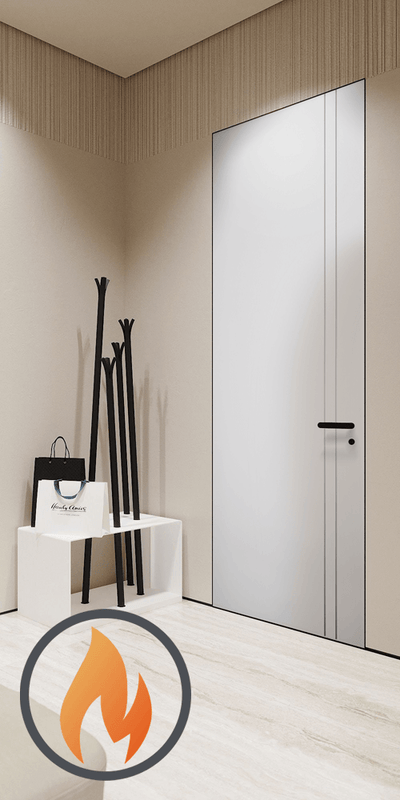
This style is particularly effective when several doors are located along one corridor. Rather than creating a row of contrasting trim elements, concealed-frame doors establish a calm, continuous surface.
Installation must be planned carefully. Wall thickness, opening dimensions, drywall or plaster conditions, and finished floor height all affect the final result. A concealed-frame door is not the best place to improvise during installation.
An embossed finish adds raised, recessed, ribbed, brushed, or otherwise tactile detail to the door surface. The relief may be subtle, but it changes how light moves across the door.
Choose an embossed door when you want:
Embossed finishes work well in warm contemporary interiors, where completely smooth doors may feel too stark. They can echo other materials in the room without copying them exactly.
Use restraint when combining textures. If the room already includes fluted cabinetry, ribbed glass, patterned tile, and heavily grained flooring, a highly pronounced door texture may make the space feel busy. In that situation, a subtle embossed surface or planar veneer may be more successful.
The best finish can still fail if the opening system does not suit the room. Think about movement first: where will the door travel, and what will it interfere with?
Swing doors remain the most straightforward choice for bedrooms, bathrooms, offices, and other standard openings. They are familiar, easy to operate, and available in a wide range of modern finishes.
Choose a swing door when:
Review the swing doors collection when a hinged configuration fits your floor plan.
Pocket doors slide into a cavity inside the wall. When open, the door does not occupy floor space or project into the room.
They are useful for:
Pocket doors require more planning than standard swing doors because the wall must accommodate the sliding panel and hardware. Check for plumbing, electrical wiring, structural supports, and sufficient wall depth before selecting this option.
For compact layouts, compare the pocket doors collection.
Barn doors slide across the wall rather than into it. They can add a stronger decorative statement, especially in loft-inspired, industrial, or warm modern interiors.
Sliding interior doors can also create a refined transition between connected spaces while preserving circulation. They are valuable where a hinged door would block furniture or reduce usable width.
Consider the sliding interior doors collection when you want a flexible room divider or a wide architectural opening.
Bi-fold doors fold as they open, making them suitable for larger openings where a single swing panel would be impractical.
They can help connect:
Their hardware and panel alignment should be reviewed carefully. A bi-fold system must operate smoothly and remain visually balanced when closed.
Glass is useful when you want to preserve brightness between rooms without leaving the opening completely exposed. Frosted, fluted, reeded, or textured glass can soften views while allowing daylight to pass through.
Glass doors are particularly effective between:
Use opaque or fully solid doors where privacy, darkness, and sound control are more important. Bedrooms, bathrooms, nurseries, and media rooms usually benefit from a blind door rather than a glazed design.
When choosing glass, consider both transparency and texture. Clear glass offers the most visual connection. Diffused glass creates a softer boundary. Reeded or textured glass adds another layer of material interest, but it may also introduce a more recognizable decorative statement.
See the interior doors with glass collection for options that balance light and separation.

A consistent home does not require every door to be identical. It requires the finishes to relate to one another.
Use this room-by-room approach:
Choose a blind, opaque door when privacy and quiet are priorities. Planar lacquer offers a calm, understated appearance, while warm veneer can make the room feel more inviting.
Select a moisture-appropriate finish and confirm the manufacturer’s care recommendations. A smooth planar surface is easy to maintain, while a textured finish can add warmth to an otherwise hard-surface room.
A solid door offers privacy for calls and focused work. If the office lacks daylight, consider diffused glass, provided visual privacy remains acceptable.
Hallways benefit from slim frames, concealed details, and finishes that reduce visual clutter. A planar door in a wall-adjacent color can make the corridor feel wider.
Use glass, sliding, or double-door configurations when you want flexibility between rooms. A textured or warm wood finish can also make the opening a deliberate focal point.
The most expensive mistakes usually happen before installation. Confirm the following information with your designer, contractor, or door specialist.
Opening measurements
Performance needs
Hardware requirements
Finish coordination
Installation planning
Bring finish swatches into the room. A door sample can look different beside your flooring, paint, and daylight than it does in a showroom.

For many projects, the strongest solution is a coordinated combination rather than one door style used everywhere.
A practical specification might include:
This approach creates visual consistency while allowing each room to perform properly.
When comparing Italian doors and other European interior doors, focus on the complete experience: the surface, edge, frame, hardware, movement, and installation. Italian craftsmanship is most valuable when those elements work together with precision.
The right modern interior door should feel intentional from every angle. It should support the way you live, preserve the proportions of the room, and add a level of sophistication that remains relevant for years.
A: Planar doors with slim or concealed frames are usually the best choice for minimalist interiors. A wall-matched lacquer creates a quiet, integrated look, while a subtle wood veneer adds warmth without excessive decoration.
A: Italian doors can be worthwhile when you value refined detailing, finish quality, customization, and a coordinated architectural appearance. Compare construction, hardware, frame design, and installation requirements rather than judging by origin alone.
A: In modern European door design, blind often refers to a concealed-frame or hidden-frame treatment that minimizes visible casing. It can also be used more generally for an opaque door without glass, so confirm the manufacturer’s terminology before ordering.
A: A planar finish is smooth and flat, creating a clean architectural surface. An embossed finish includes tactile relief, grooves, or texture that adds depth through light and shadow. Choose planar for simplicity and embossed for visual and tactile character.
A: Yes. Pocket doors can preserve floor space because the panel slides into the wall instead of swinging into the room. The wall cavity must be planned around the pocket system, plumbing, electrical work, and structural supports.
A: Solid, opaque doors are generally better for bedrooms because they provide stronger visual privacy and help create a darker, quieter environment. Use glass only when daylight transmission is more important than complete separation.
A: Match undertones rather than trying to match every color exactly. Warm oak flooring pairs naturally with warm veneer, while cool gray flooring often works with matte lacquer, gray-wash finishes, or charcoal hardware.
Trade Program
Are You a Trade Professional?
Architects, designers, and contractors receive exclusive pricing and dedicated project support.
Learn About Trade Pricing →Get Started
Our team can help with product selection, sizing, and specification — at no charge.


