My shopping cart
Your cart is currently empty.
Continue Shopping
Working from home is easier when your office feels separate from the rest of the house. The right door can reduce visual distractions, soften household noise, and give you a clear transition between work time and personal time.
But not every home office needs the same solution. A compact office may benefit most from a pocket door. A workspace beside a living room may need a more expressive barn door. A minimalist interior may call for a hidden frame door that blends into the wall.
The best choice depends on four practical questions: How much privacy do you need? How important is sound control? Do you want to preserve natural light? How much floor and wall space can the door use?
Before choosing a finish or hardware style, define the problem. A beautiful door that does not support the way you work will quickly become frustrating.
Your work habits matter, too. Frequent video calls, confidential conversations, and deep-focus tasks usually justify more privacy than occasional administrative work.

Barn doors are popular in home offices because they combine a strong visual statement with efficient operation. The panel slides alongside the wall instead of swinging into the room, so you can place a desk, chair, or storage unit closer to the opening.
Modern barn doors do not have to look rustic. A flush panel in walnut, charcoal, white, or a subtle textured finish can complement a refined European interior. Exposed hardware becomes part of the composition, adding a crisp architectural line above the doorway.
a. You want to save floor space. A sliding panel does not require clearance for a swing, which is useful in a narrow office or hallway.
b. You want the door to become a design feature. A wood-grain panel can add warmth to a neutral room, while a dark finish creates contrast against pale walls.
c. You want to close the office quickly. A barn door can conceal a desk and work zone when the room is part of a larger living area.
There is one important limitation. Because a barn door sits in front of the wall rather than inside a wall cavity, small gaps may remain around the opening. This generally means less sound control than you would get from a well-fitted hinged or pocket door. If your office is next to a television room or kitchen, consider a heavier panel, soft-close hardware, perimeter seals where suitable, and acoustic treatments inside the office.
Barn doors are best when style, accessibility, and space saving are more important than maximum acoustic privacy.
Browse the Barn Doors collection for contemporary sliding design directions, including solid and light-enhancing options.

A pocket door slides into a concealed cavity inside the wall. When open, it nearly disappears. That makes it one of the most effective home office door ideas for rooms where every inch matters.
Pocket doors are particularly useful for offices created from a former closet, a section of a hallway, or a small bedroom. A conventional door may interfere with the desk or create an awkward circulation path. A pocket door keeps both sides of the opening clear.
a. You need maximum usable floor area. The door does not swing into the office or the adjacent room.
b. You want an uncluttered appearance. With the door open, the opening reads as a clean passage rather than a permanent visual barrier.
c. You need flexible privacy. Close the door for calls and focused work, then open it to reconnect with the rest of the home.
For the strongest privacy, consider a solid or solid-core construction. “Solid core” means the door has a dense internal structure rather than a lightweight hollow center. It usually feels more substantial and can help reduce sound transmission, although the final result also depends on the frame, seals, wall construction, and installation quality.
Glass pocket doors provide another option. Clear glass shares light freely, while frosted or opaque glass creates a softer boundary without exposing the entire workspace. This is helpful when the office borrows daylight from an adjoining room.
A pocket door does require planning. The wall beside the opening must have enough uninterrupted space for the door to slide into. Plumbing, electrical wiring, built-in shelving, and structural elements may affect whether a pocket cavity is practical. Confirm these conditions before finalizing the layout.
For a tailored configuration, review the Modern European Interior Doors collection, where interior doors can be considered in space-saving formats such as pocket, barn, bypass, and bi-fold applications.

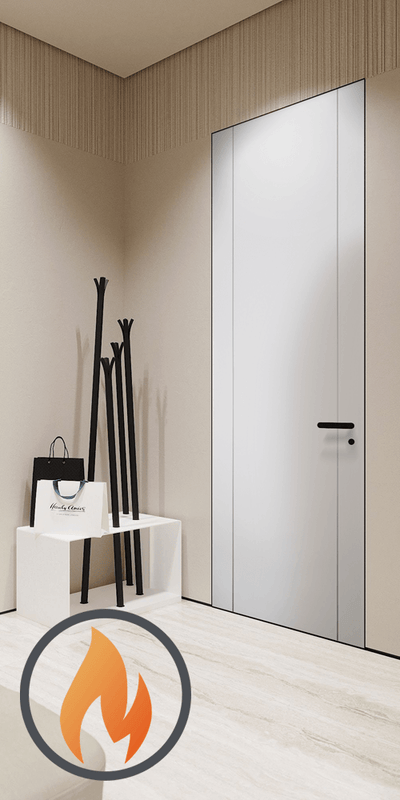
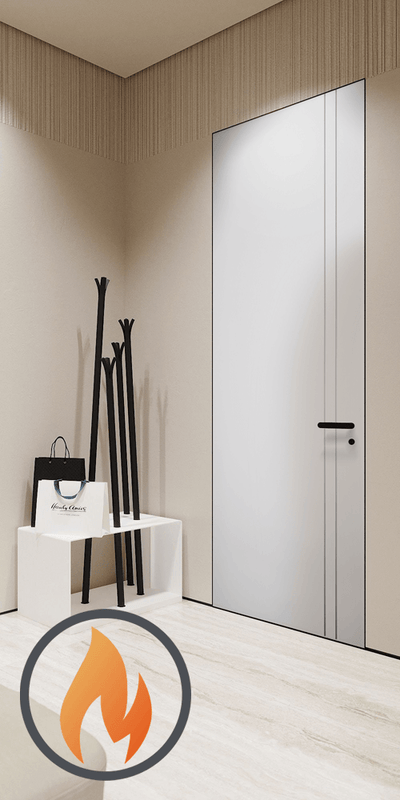
A hidden frame door, sometimes called a concealed frame or flush door, is designed to sit nearly level with the surrounding wall. The frame is concealed, and the door surface can be finished to coordinate with the wall color or material.
This approach is ideal when you want the office to feel discreet. The goal is not to make the door disappear through a novelty feature. It is to create visual continuity and reduce unnecessary lines in the room.
a. You prefer minimalist interiors. The flush surface supports a quiet, uninterrupted wall plane.
b. You want the office to feel private when closed. A concealed entrance gives the workspace a more intentional separation from the home.
c. You are designing a high-end renovation. Hidden frame detailing can reinforce a refined, built-in appearance across corridors, libraries, and home offices.
A hidden frame door may be hinged or configured in another appropriate format, depending on the opening and project requirements. For sound control, the door leaf alone is not enough. Pay attention to the fit, latch, seals, wall assembly, and any gaps beneath the door.
This option is also valuable when your office is visible from a main living space. Matching the wall and door finish can keep the workspace from becoming the first thing you see when entering the room.
See the Hidden Frame Interior Doors collection for flush, seamless design inspiration.
The best office door is rarely chosen by appearance alone. Use this simple comparison to clarify the trade-offs:
| Priority | Best starting point | Design note |
|---|---|---|
| Maximum floor space | Pocket door | Requires a suitable wall cavity |
| Strong visual separation | Hidden frame or solid pocket door | Coordinate the finish with the wall |
| Contemporary statement | Barn door | Hardware becomes part of the design |
| Daylight with privacy | Frosted or opaque glass | Transmits light without full visibility |
| Frequent calls | Solid, well-fitted door | Add acoustic treatment inside the room |
| Small office beside a living area | Pocket or barn door | Avoid a door swing into circulation |
For a typical home office, I recommend deciding in this order:
A door can support concentration, but the surrounding room also matters. Keep the palette restrained and use materials with tactile depth rather than excessive decoration.
Choose barn doors when you want a space-saving door with visible design character and moderate privacy. They are especially effective in open-plan homes where the office needs to close off quickly without feeling permanent.
Choose pocket doors when floor space is limited and you want the cleanest transition between open and closed modes. They are a strong all-around choice for compact offices, provided the wall can accommodate the cavity.
Choose hidden frame doors when your priority is a seamless, sophisticated wall treatment. They work beautifully in minimalist homes and projects where the office should feel integrated rather than highlighted.
The right door should make working from home feel more deliberate. It should close with purpose, preserve the room’s proportions, and support the atmosphere you want to create.
A: Yes, barn doors are a strong choice when you want to save floor space and add architectural character. They generally offer less sound control than a close-fitting hinged or pocket door, so consider a substantial panel and acoustic improvements if you take frequent calls.
A: A well-installed solid or solid-core pocket door can usually provide better privacy than a barn door because it closes within the opening. Sound performance still depends on the wall, frame, seals, hardware, and installation quality.
A: Yes. A glass, frosted, or opaque pocket door can transfer daylight from an adjacent room while preserving a degree of privacy. Choose the glass treatment based on how much visibility you want when the door is closed.
A: A hidden frame door uses a concealed jamb and frame so the door sits nearly flush with the surrounding wall. It creates a clean architectural surface and can be finished to blend with the wall or provide a subtle contrast.
A: Confirm that the wall has enough uninterrupted space for the door cavity and that it does not contain plumbing, electrical wiring, or structural elements that would interfere. Coordinate the opening with your contractor before ordering.
A: Start with a substantial, well-fitted door and pay attention to gaps around the frame and beneath the panel. Then add rugs, upholstered furniture, curtains, acoustic wall treatments, and other sound-absorbing materials inside the office.
Volume Discount
Save on 6+ Door Orders
Order six or more doors and receive a special volume discount on your purchase.
Shop Now →Free Quote
Have a Door Schedule?
Send us your specifications and receive a custom quote - no obligation.
Send Schedule →No Obligation
Get a Free Quote
Tell us what you need and we will send a detailed quote within 24 hours.
Request Quote →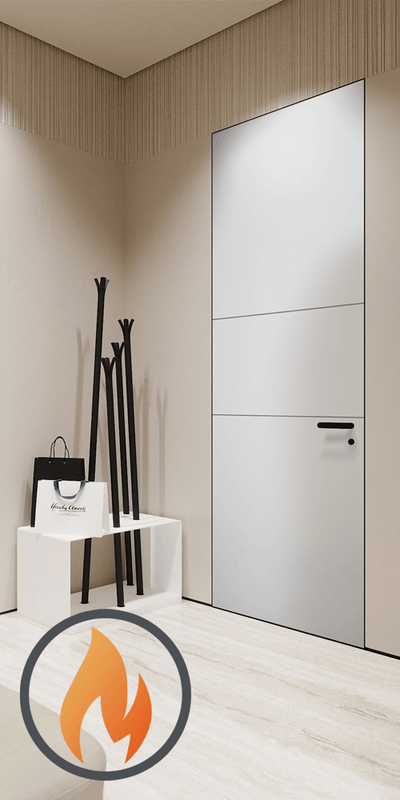
Flexible Payments
Financing Available
Spread the cost of your door project with our flexible financing options.
Learn More →Trade Program
Are You a Trade Professional?
Architects, designers, and contractors receive exclusive pricing and dedicated project support.
Learn About Trade Pricing →Get Started
Our team can help with product selection, sizing, and specification — at no charge.
Sign up for our mailing list to receive new product alerts, special offers, and coupon codes.
© 2026 My City Doors |


