My shopping cart
Your cart is currently empty.
Continue Shopping
Italian doors are valued for more than their elegant appearance. The best designs combine careful proportions, refined finishes, reliable hardware, and practical performance in one architectural element. Whether you are renovating a single room or specifying doors for an entire home, the ordering process deserves the same attention as flooring, cabinetry, or windows.
Before you choose a finish or place an order, clarify how the door will function, how it will fit, and what level of customization your project requires. A beautiful door that arrives in the wrong size or with incompatible hardware can create delays and added expense.
This guide answers the key questions homeowners, designers, architects, and contractors should ask before ordering Italian doors for interior spaces or entryways.
The phrase Italian doors can describe doors made in Italy, doors inspired by Italian design, or doors supplied with European construction details. These are not always the same thing. Ask for clear information about the door’s origin, construction, materials, and finishing process.
Italian craftsmanship is often associated with:
The label alone is not a quality guarantee. Review finish samples, technical specifications, warranty information, and installation requirements before making a decision.
For a broad overview of European-inspired styles, review the Modern European Interior Doors collection.
The location of the door determines nearly every important specification. Interior and exterior applications require different priorities.
Interior doors typically focus on:
A swing door is a natural choice for bedrooms, bathrooms, and offices when there is enough clearance. A pocket, barn, bypass, or bi-fold configuration may be better where floor space is limited. Compare options in the Interior Doors collection and consider Pocket Doors when you want the door to disappear into the wall.
Entry doors must also address security, weather exposure, insulation, threshold details, and compatibility with the building envelope. The exterior frame and hardware are just as important as the door slab.
Do not use an interior door in an exterior application unless the manufacturer specifically approves it.

Accurate measurements are essential, especially when ordering custom or European-style doors. Do not rely on the nominal door size alone. The rough opening, finished opening, wall thickness, floor height, and frame system all affect the final fit.
Before ordering, record:
Use the smallest reliable opening dimension when confirming fit, but follow the supplier’s measuring instructions. A professional should verify the final dimensions before a custom order is released.
European dimensions may not match common North American openings. Confirm whether the door is designed around local rough-opening standards or requires framing modifications.

The opening style affects both the appearance and the way your room functions. Choose the configuration based on circulation first, then aesthetics.
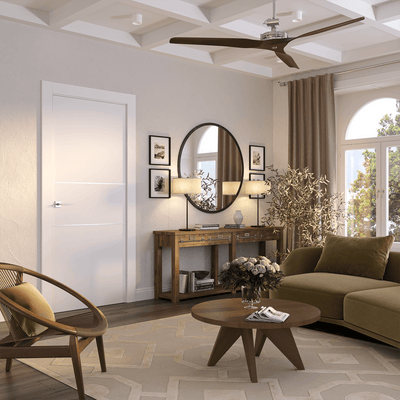
a. Swing doors provide a familiar, substantial feel and offer excellent privacy. Make sure the door has enough room to open fully without hitting furniture.
b. Pocket doors slide into the wall and preserve valuable floor area. They are useful for bathrooms, offices, laundry rooms, and compact corridors, but the wall must be suitable for a pocket-door frame.
c. Barn doors slide across the wall surface and can become a strong architectural feature. They require enough clear wall space and may not provide the same acoustic seal as a hinged door.
d. Bypass and bi-fold doors work well for closets, wide openings, and flexible partitions. Check the required stacking space and the clear opening when the doors are fully open.
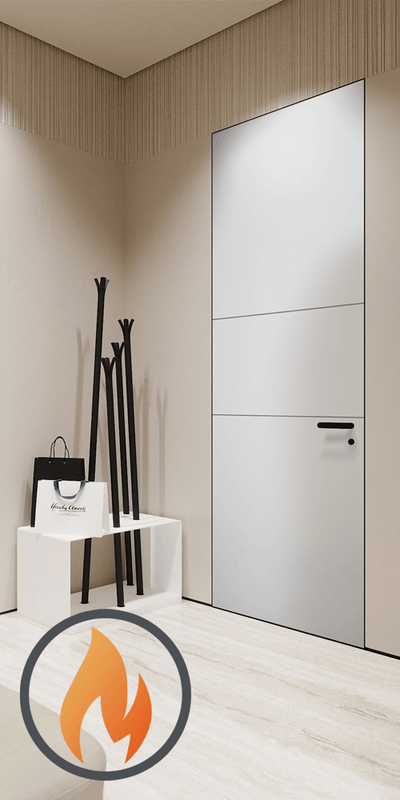
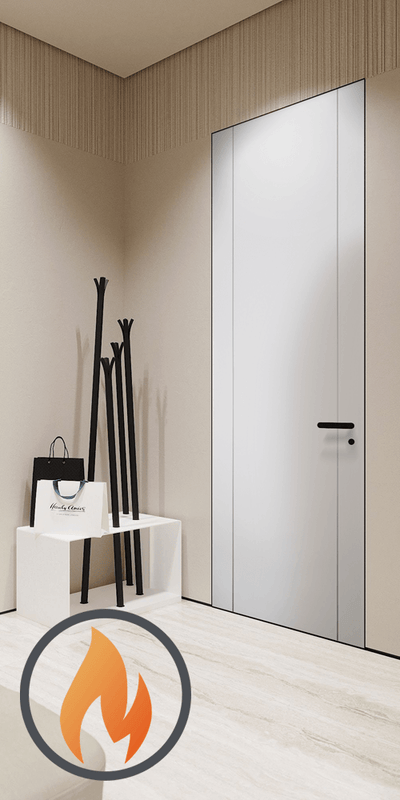
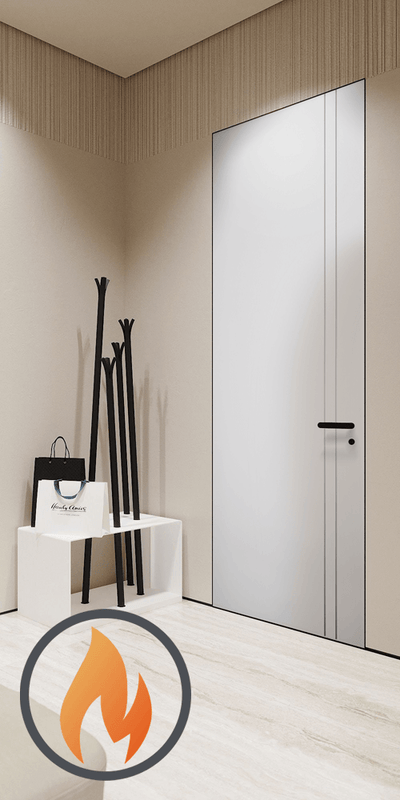
e. Hidden-frame doors create a minimal transition between the wall and door leaf. They require especially careful planning because the frame, drywall, and finish must meet cleanly.
The right solution should make the room easier to use, not simply more fashionable. Browse Swing Doors, Barn Doors, and Bi-Fold Doors to compare spatial solutions.
Finish selection affects how the door feels in the room, how it coordinates with surrounding materials, and how easily it shows fingerprints or wear.
Common options include:
Request physical samples whenever possible. Digital images cannot show the exact sheen, grain, or undertone of a finish. Compare samples in both natural and artificial light, alongside your flooring and wall color.
Matte finishes are generally more forgiving in busy homes. High-gloss finishes create a more dramatic effect but can make fingerprints and small surface marks easier to see.
Hardware is not an afterthought. It influences the door’s operation, security, visual weight, and long-term serviceability.
For interior doors, confirm:
Concealed hinges support a sleek, uninterrupted appearance but require precise alignment. A heavier door leaf may also need hardware designed for its weight and frequency of use.
For entry doors, review the lockset, cylinder, multipoint locking options, pull handle, hinges, threshold, and weather seals as one system. Your selected hardware should be compatible with the door construction and local security requirements.
Choose finishes that relate to other metals in the room or on the facade. Matte black creates contrast, brushed metal feels understated, and warm metallic finishes can complement wood and stone.

Glass can make a home feel larger and brighter, but the correct glass type depends on the room and the privacy required.
Clear glass works well where openness is the priority. It can connect a kitchen, living area, dining room, or hallway while preserving a visual relationship between spaces.
For bathrooms, offices, bedrooms, and street-facing areas, consider:
Also consider how the glass will be cleaned and whether the frame can support the selected panel. A door with glass should balance light transmission with privacy, safety, and the overall proportion of the opening.
For light-enhancing interiors, review the Interior Doors with Glass collection.

Lead time depends on whether the door is a standard configuration or a customized order. Size, finish, glass, frame type, hardware, quantity, and shipping requirements can all affect the schedule.
Before placing the order, request written confirmation of:
For a renovation, do not schedule installation based only on a verbal estimate. Build in time for freight delivery, inspection, acclimation where applicable, and correction of any shipping damage.
Order samples and confirm specifications early. This is particularly important when several doors must match throughout the home.
An attractive online price may refer only to the door leaf. Other components can be priced separately.
Ask whether the quote includes:
For interior doors, clarify whether you are buying a slab, a prehung unit, or a complete door system. A slab-only purchase may require separate frame construction, hardware preparation, and finishing work.
For entry doors, confirm the threshold and frame details because they affect weather resistance and installation. Compare complete system costs rather than comparing door-leaf prices alone.
Installation quality can determine whether a premium door performs as intended. Even a well-constructed door may bind, drag, leak, or sit unevenly if the opening is out of square.
Interior installation requires attention to:
Hidden-frame and flush doors require coordination among the door supplier, drywall installer, painter, and trim team. The frame must be installed before the final wall finish, and the surrounding surface must remain straight and stable.
Entry-door installation requires even more care. The installer must address sill support, flashing, weather seals, insulation, anchoring, and alignment with the exterior wall assembly. Use an experienced installer who understands the specified door system.
Inspect the doors as soon as they arrive. Look for damage, finish variation, missing hardware, and incorrect handing before installation begins.
Before you approve your Italian doors, confirm:
For exterior applications, compare the Exterior Doors collection and Patio Doors collection according to the needs of your facade and climate.
The most successful door projects begin with practical decisions, not finish colors. First define how the opening must function. Then confirm the dimensions, construction, hardware, finish, budget, and schedule in writing.
Italian doors can bring a refined European character to both new construction and renovation projects. Their strongest qualities are the details: a precise reveal, a quiet hinge, a consistent finish, a comfortable handle, and a proportion that makes the entire room feel more considered.
Take measurements seriously. Review samples in person. Plan installation before the order is placed.
That process will help you choose doors that look sophisticated on installation day and continue to perform beautifully for years.
A: No. Italian-inspired and Italian-made doors may be available in sizes suited to North American projects, but you should confirm the required rough opening, door thickness, frame depth, and finished dimensions before ordering.
A: A door slab is the door leaf only. A prehung or complete door unit generally includes the frame, hinges, and other prepared components. Confirm exactly what is included in your quote.
A: They require more precise coordination than a conventional framed door because the frame and wall finish must align closely. Professional installation is recommended, especially for renovation projects.
A: A durable matte lacquer or textured finish is often practical because it minimizes the appearance of fingerprints and small marks. The best choice also depends on cleaning requirements, room lighting, and your preferred aesthetic.
A: Many European-style door systems allow customization of sizing, finishes, glass, handing, frames, and hardware. Availability varies by configuration, so confirm options and pricing before approval.
A: Order as early as possible after the opening dimensions and design specifications are confirmed. Custom sizing, special finishes, glass, hardware, freight, and installation coordination can all extend the project schedule.
A: They can be, provided you select an appropriate glass type. Reeded, frosted, or textured glass allows natural light to pass through while reducing clear visibility.
A: Yes. Entry doors depend on accurate framing, threshold support, weather sealing, anchoring, and hardware adjustment. An experienced installer helps protect both performance and warranty coverage.
Trade Program
Are You a Trade Professional?
Architects, designers, and contractors receive exclusive pricing and dedicated project support.
Learn About Trade Pricing →Get Started
Our team can help with product selection, sizing, and specification — at no charge.


