My shopping cart
Your cart is currently empty.
Continue Shopping
A door is more than a way to divide two rooms. It affects how your home feels, how much light moves through it, how well sound is contained, and whether the interior appears carefully designed or simply finished.
That is why the comparison between Italian doors and domestic doors deserves more attention than a simple price check. A standard domestic door may be practical and readily available. A premium Italian or European-style door, however, can offer a more refined combination of construction, proportion, customization, and architectural detail.
The important question is not whether every Italian door is automatically better. It is whether the additional investment delivers the qualities that matter most in your project.
For many design-led renovations, the answer is yes.
The difference usually comes down to design priorities, construction, customization, and installation requirements.
Many domestic doors are produced for broad availability. They are made in common sizes, stocked in familiar finishes, and designed to keep purchasing and installation straightforward. That can be a sensible choice when budget and speed are your main concerns.
Italian doors and other premium European doors are more often treated as part of the architecture. Their proportions, frames, hardware, surfaces, and opening systems are designed to work together as one visual composition.
That distinction is immediately visible in details such as:
A domestic door can be well made. European craftsmanship simply tends to give you more control over the complete result.

It can, particularly when you compare a premium European door with a basic hollow-core domestic door.
Craftsmanship is not only about hand-finishing. It includes the accuracy of the frame, the stability of the door slab, the quality of the surface treatment, and how consistently all components work together.
A hollow-core door uses a lightweight internal structure. It keeps the door affordable and easy to handle, but it may provide less sound control and a less substantial feel.
A solid-core or engineered-core door has a denser internal construction. It generally feels quieter and more stable when you open and close it. Engineered materials can also be designed to resist movement caused by normal changes in temperature and humidity.
This does not mean that every domestic door is poorly constructed. Premium domestic manufacturers also offer solid-core options. The point is to compare the actual specification rather than assume that “domestic” or “Italian” tells you everything.
Ask about:
a. Core construction: hollow, solid, engineered, or layered
b. Door thickness: a thicker slab often feels more substantial
c. Edge construction: inspect how the finish wraps around the door
d. Moisture resistance: important for bathrooms, laundry areas, and changing climates
Italian doors are often selected for their exceptionally controlled finishes. A matte lacquer, wood veneer, textured surface, or planar finish can create a quiet architectural effect that is difficult to achieve with a basic printed laminate.
The best finishes are consistent across the face, edges, and frame. Grain direction is considered. Seams are minimized. Hardware is selected to support the overall design instead of becoming an afterthought.
You should still inspect samples before ordering. Lighting can change the appearance of white, gray, wood, and textured finishes significantly.
Hardware is one of the easiest ways to identify a premium door.
A well-engineered door should open smoothly, close with controlled movement, and remain properly aligned. Concealed hinges can create a cleaner appearance, while higher-quality latches and handles provide a more satisfying daily experience.
The difference is subtle at first. You notice it every day afterward.
This is where European doors often have the clearest advantage.
Domestic doors are frequently available in a limited number of stock sizes and standard finishes. That is efficient, but it may force you to adapt your design around the door.
With Italian doors and custom European-style doors, the door can be specified as part of the room’s design from the beginning. You may have more options for:
This flexibility is especially valuable in contemporary homes where the door is expected to align with wall panels, millwork, flooring, and ceiling lines.
For projects with unusual openings or a strong design concept, review the custom-order interior doors collection before finalizing your wall layout. Ordering the door after the framing is complete can limit your choices.

In many cases, yes. Italian doors are particularly effective in interiors that depend on clean lines and visual continuity.
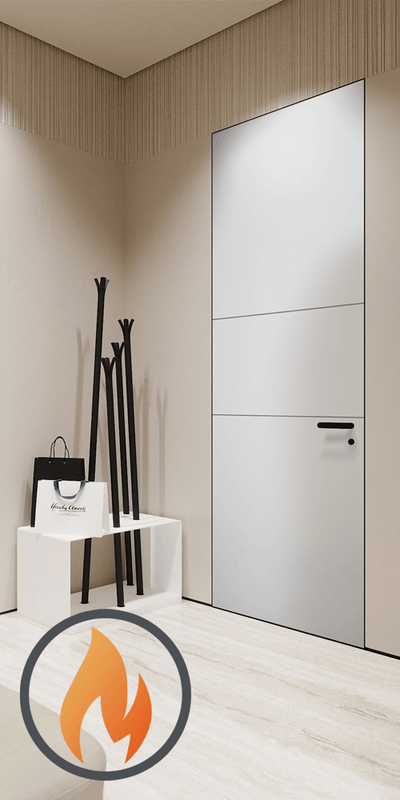
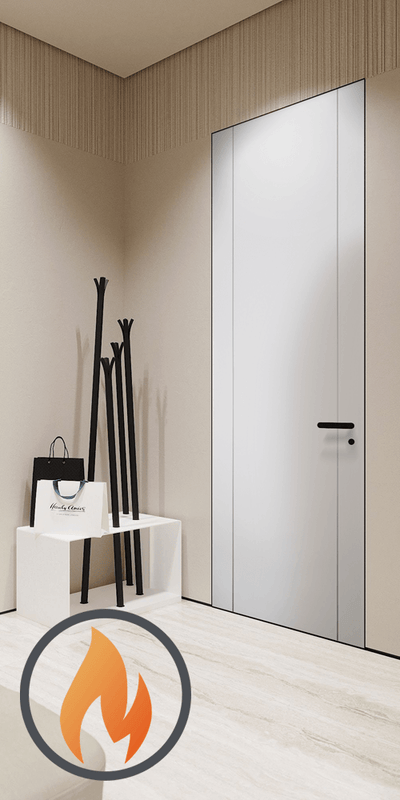
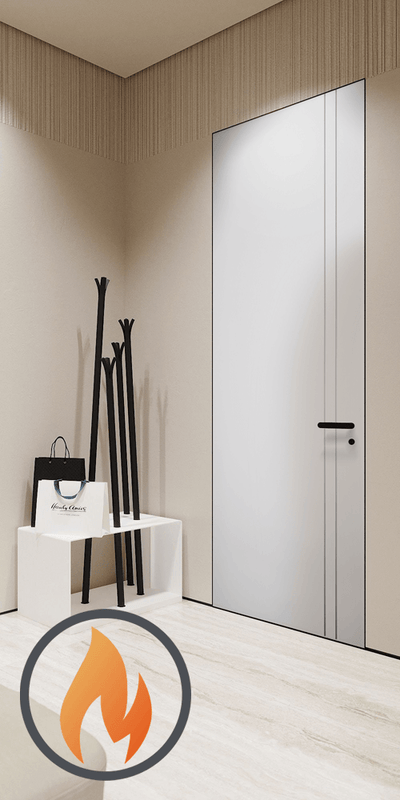
A flush door sits nearly level with the surrounding wall. A concealed frame minimizes or hides the casing, creating a quieter transition between rooms. These details help the door blend into the architecture rather than interrupt it.
That approach works well in:
A traditional domestic door with visible casing may be the right choice for a classic or transitional interior. The issue is not that one style is universally correct. The issue is whether the door profile supports the design language of the room.
For a broader selection of contemporary European-inspired styles, review the modern European interior doors collection.
A door cannot make a room physically larger, but it can change how spacious the room feels.
Glass interior doors help move natural light between spaces while preserving a sense of separation. Pocket doors remove the swing area required by a conventional hinged door. Tall, slim doors draw the eye upward. Flush surfaces reduce visual noise.
The best solution depends on the room.
See the pocket doors collection for space-saving configurations.
A considered door plan often improves the entire floor plan. It is not only a finishing choice.

A premium Italian door can be more durable than a low-cost domestic door, but durability depends on materials, installation, maintenance, and use.
The strongest comparison is between specifications, not country of origin.
Look for:
Installation deserves special attention. A premium door installed in an uneven opening may perform poorly. A standard door installed carefully may outperform expectations.
For that reason, involve your contractor or installer before ordering. Confirm the rough opening, finished floor height, wall thickness, swing clearance, and trim conditions. The door should be specified around the real opening, not an assumed one.

They are worth it when the door contributes meaningfully to the project’s design and performance.
The investment is easier to justify when:
Domestic doors may be the better decision when:
A useful approach is to create a priority list rather than upgrade every door automatically. Use premium Italian or European-style doors in the entry hall, primary suite, home office, living areas, and other visually important locations. Choose practical standard doors for secondary spaces if that better supports the budget.
Before deciding between Italian doors and domestic doors, request clear information on the following:
Ask whether the door is hollow-core, solid-core, engineered, or layered. Confirm its thickness and intended use.
Determine whether the frame is standard, wrapped, concealed, or designed for a flush-to-wall installation. The frame strongly affects the final appearance.
Request physical samples where possible. Compare the finish in daylight and under the lighting planned for the room.
Review hinge type, latch quality, handle options, and the availability of replacement components.
For exterior applications, ask about insulation, weather sealing, glazing, security, and local code requirements. Interior doors should be evaluated for privacy, sound control, and moisture exposure.
Custom European doors may require more planning than stock domestic doors. Confirm manufacturing time, shipping, delivery conditions, and installation responsibilities before placing the order.
For a design-conscious renovation, Italian doors are often worth the investment because they combine refined proportions, substantial construction, customization, and architectural clarity.
They are not automatically the right choice for every room or every budget. A domestic door can be a sensible and durable option when its specifications meet your needs.
The best decision is to compare the complete system: slab, frame, hardware, finish, performance, lead time, and installation. If the European option solves a design or functional problem that the domestic alternative cannot, the premium has a clear purpose.
Choose the door as carefully as you choose the flooring or cabinetry. It will shape the character of your home for years.
A: Not automatically. Premium Italian doors often provide greater design flexibility, refined finishes, and integrated frame systems, while premium domestic doors can offer excellent construction and easier availability. Compare the core, finish, hardware, frame, and performance rather than relying only on origin.
A: The higher price may reflect engineered construction, custom sizing, specialized finishes, concealed hardware, more detailed quality control, and international logistics. The value is strongest when these features are important to your design or project requirements.
A: Many premium European-style interior door systems offer more sizing and configuration flexibility than standard stock doors. Confirm available dimensions, wall conditions, and manufacturing requirements before framing the opening.
A: Yes, but the door and frame must be specified for the project’s opening dimensions, wall thickness, hardware requirements, and local installation practices. Coordinate with your contractor or installer early in the design process.
A: A solid or engineered core generally provides better sound control than a lightweight hollow-core door. Actual performance also depends on the frame, seals, gaps, wall construction, and installation quality.
A: They can be. Pocket, bypass, and carefully proportioned swing doors can preserve floor area, while glass options can improve light flow. Choose the opening system based on circulation, privacy, and available wall space.
A: You do not have to. Many homeowners use premium doors in prominent spaces and practical alternatives in utility or low-visibility areas. A consistent finish and hardware strategy can make the entire home feel cohesive.
A: Accurate site measurements are essential. Confirm the rough opening, finished floor height, wall thickness, swing direction, frame requirements, and hardware placement before the order is finalized.
Trade Program
Are You a Trade Professional?
Architects, designers, and contractors receive exclusive pricing and dedicated project support.
Learn About Trade Pricing →Get Started
Our team can help with product selection, sizing, and specification — at no charge.


