My shopping cart
Your cart is currently empty.
Continue Shopping
Matte black door hardware has become a defining detail in modern interiors. It adds contrast to light walls, sharpens the look of natural wood, and gives a simple door a more architectural presence. The finish is especially effective on modern interior doors, where clean lines and carefully selected materials matter as much as the door itself.
But choosing black hardware involves more than selecting a color. You also need to consider the finish process, base material, durability, hinge coordination, door style, and the way the hardware relates to the rest of your home.
This guide explains how to choose matte black door hardware for European-style interior doors so the final result feels intentional, refined, and built for everyday use.
Matte black creates a visual anchor. Against a pale door or neutral wall, it provides just enough contrast to define the opening without overwhelming the room.
The finish is also versatile. It can support several interior styles, including:
The key is restraint. Use black hardware as a repeated accent rather than an isolated statement.
A black door lever looks most polished when it relates to other elements such as window frames, lighting, cabinetry pulls, plumbing fixtures, or furniture legs.

The color alone does not determine quality. The underlying material and finishing process have a major effect on how the hardware performs over time.
PVD, or Physical Vapor Deposition, is a finishing process that bonds a thin coating to the surface of metal in a vacuum environment. It is generally considered a premium option for high-touch hardware.
Benefits include:
PVD matte black is a strong choice for bathrooms, hallways, primary bedrooms, and other areas where handles receive daily use.
Powder coating applies a dry, durable finish to metal before it is cured with heat. It can provide an even, attractive surface and is widely used across modern hardware.
Quality varies between manufacturers. A well-applied powder coat can perform very well indoors, but deep impacts or repeated friction on edges may eventually reveal the metal underneath.
Electroplating uses an electrical process to deposit a finish onto the hardware. Its durability depends on the quality of the base metal, preparation, coating thickness, and manufacturing standards.
It can be a suitable option when the hardware comes from a reputable architectural manufacturer with clear care and performance information.
Painted hardware is usually the most budget-friendly option. It can look excellent when new, but it is typically more vulnerable to chipping, abrasion, and wear at the edges.
For a low-use closet or guest room, that may be acceptable. For a busy family home, premium coated hardware is usually the better long-term investment.
Matte black hardware can be highly durable, but it should not be treated as maintenance-free.
The most common causes of visible wear are:
Matte surfaces have one practical advantage: they tend to hide fingerprints and small marks better than polished black or high-gloss finishes. However, a deep scratch may still be visible because it exposes the brighter metal below.
For the best result, ask about the hardware’s:
Choose performance first. The finish should support your daily routine, not complicate it.
Yes, in most modern interiors, matching handles and hinges create a more cohesive result. This is particularly important with European-style doors because their design is often intentionally minimal. Small inconsistencies become more noticeable when the overall door is clean and uncluttered.
Whenever possible, select handles, hinges, privacy accessories, and escutcheons from the same manufacturer or finish family.
Different brands may use the term “matte black” for finishes with noticeably different:
One handle may appear soft charcoal, while another looks closer to a deep satin black. The difference can be subtle in a showroom but obvious once the pieces are installed a few inches apart.
You generally have two design directions:
a. Visible matte black hinges
Slim black butt hinges make the construction of the door part of the aesthetic. They work well in contemporary, industrial, and transitional interiors where a small amount of hardware detail is welcome.
b. Concealed hinges
Concealed hinges disappear into the door and frame when the door is closed. They are ideal when you want the door face and surrounding wall to appear uninterrupted.
With a concealed hinge, the matte black lever can remain the primary hardware detail. This produces a quieter, more architectural appearance.
Before ordering, confirm that the hinge type is compatible with the door construction, weight, frame, swing direction, and installation method.
Matte black works across a wide range of modern interior doors, but the visual effect changes with each configuration.
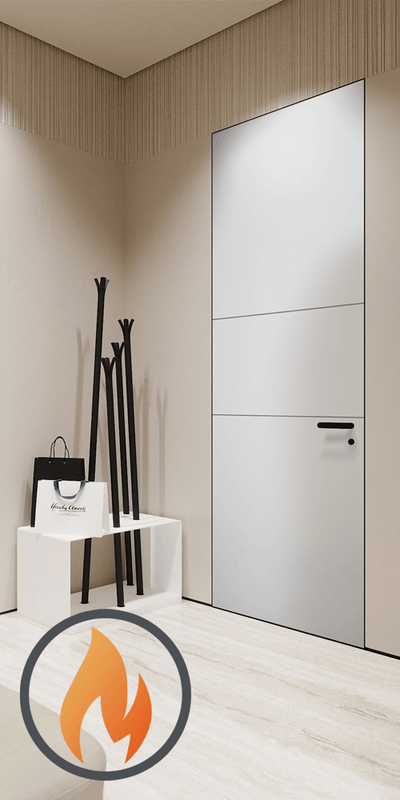
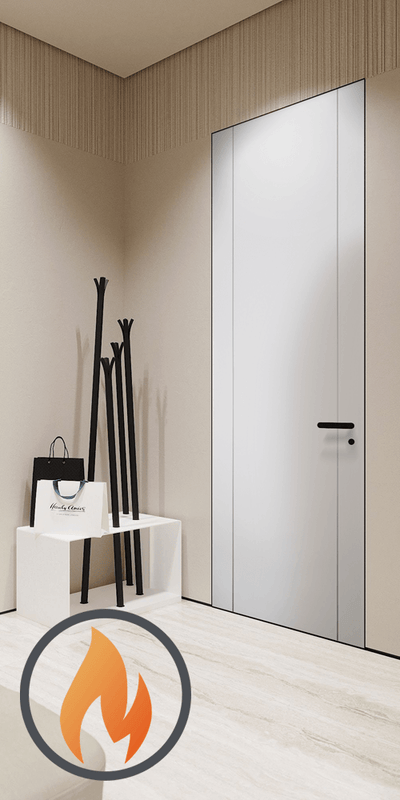
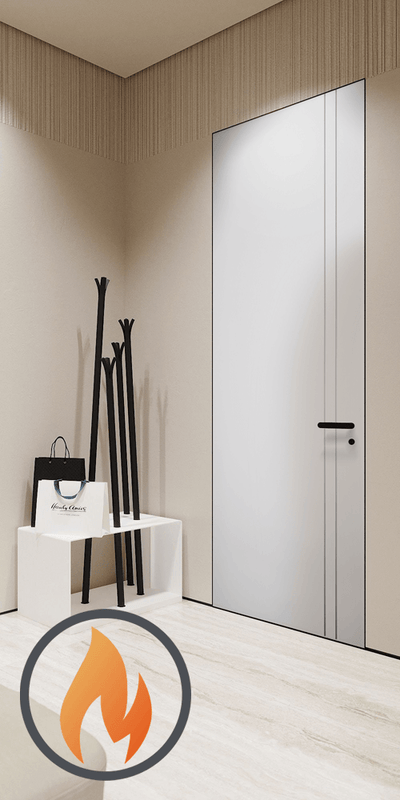
A flush door has a smooth, uninterrupted face. A matte black lever provides a crisp point of contrast and prevents the door from blending too completely into a pale wall.
This is one of the most effective combinations for contemporary homes. Browse modern European interior doors for clean-lined styles suited to this approach.
Pocket doors slide into the wall, saving floor space and keeping circulation areas open. Their hardware needs to be compact and easy to operate, often using a recessed pull rather than a projecting lever.
A matte black recessed pull can define the door without interfering with furniture or narrow walkways. See the pocket door collection for space-saving applications.
Swing doors offer the greatest flexibility for lever, rose, privacy, and hinge combinations. Matte black hardware can make a simple swing door feel more tailored and contemporary.
For rooms that require privacy, coordinate the lever with the lockset and any visible hinges. The swing door collection includes options for a variety of interior layouts.
Black-framed or glass-panel doors naturally benefit from matte black hardware because the frame and handle can read as one visual system. The result is strong but controlled, especially when paired with white walls, warm wood, and diffused daylight.
Use interior doors with glass when your priority is to divide spaces while preserving light.
Sliding and barn doors typically expose more of their operating hardware. A matte black track can create a deliberate architectural feature, particularly against a warm wood or neutral panel.
The finish should be coordinated across the track, pulls, guides, and any visible fasteners. Explore barn doors or sliding interior doors for these configurations.

Black hardware is most successful when the surrounding palette provides softness and variation.
Use these design principles:
You do not need every fixture in the room to be black. Repetition matters more than uniformity.
Proper care is simple. Use a soft, clean cloth with mild soap and water, then dry the surface thoroughly.
Avoid:
In bathrooms, wipe away moisture and soap residue regularly. Mineral deposits can become more noticeable against a dark finish if they are left to dry repeatedly.
Never scrub a scratch aggressively. You may enlarge the damaged area or dull the surrounding finish.
Before finalizing your hardware, confirm the following:
A carefully specified handle is more than a decorative accessory. It is a daily point of contact and a key part of the door’s performance.
Matte black door hardware is a powerful finishing touch for modern interior doors because it combines visual clarity with practical function. It defines pale surfaces, complements natural materials, and reinforces the clean geometry associated with European-style interiors.
For the most lasting result, choose a quality finish over the lowest price, coordinate handles and hinges carefully, and select hardware that suits the door’s operating style. Then repeat the black accent thoughtfully throughout the room.
The best installation will not feel over-designed. It will feel complete.
A: Yes. Matte black hardware creates clean contrast and pairs especially well with flush, planar, wood, glass, pocket, and sliding interior doors. It works across minimalist, contemporary, Scandinavian, and industrial-inspired spaces.
A: Durability depends on the base metal and coating process. PVD and high-quality powder-coated finishes generally resist everyday wear better than basic painted finishes. Avoid abrasive contact and harsh cleaners to protect the surface.
A: Matching them is recommended for a cohesive modern look. The safest approach is to select visible hardware from the same manufacturer or finish family, since different matte black finishes can vary in color, sheen, and texture.
A: Concealed hinges are a strong choice when you want a clean, uninterrupted appearance. Visible matte black hinges can also work well when you want to highlight the door’s construction or add an industrial detail.
A: Wipe them with a soft cloth and mild soap diluted in water, then dry them completely. Avoid abrasive pads, bleach, solvents, steel wool, and aggressive polishing products that can dull or damage the finish.
A: Matte black hardware pairs beautifully with wood doors. The dark finish adds definition to light oak, balances medium walnut, and creates a sophisticated contrast with warm natural grain.
A: It can be, provided you choose quality hardware designed to tolerate regular moisture and maintain it properly. PVD or another durable coating is preferable, and routine drying helps prevent mineral and soap buildup.
A: Pocket doors typically use recessed pulls because projecting levers can interfere with the wall pocket. A matte black recessed pull provides a practical grip while preserving the door’s streamlined appearance.
Trade Program
Are You a Trade Professional?
Architects, designers, and contractors receive exclusive pricing and dedicated project support.
Learn About Trade Pricing →Get Started
Our team can help with product selection, sizing, and specification — at no charge.


