My shopping cart
Your cart is currently empty.
Continue Shopping
Black interior doors can give a room definition without changing its layout or filling it with more furniture. They create contrast, draw the eye to an opening and make transitions between rooms feel intentional. The effect can be crisp and graphic, warm and understated, or quietly dramatic. It depends on the door’s style, finish and surroundings.
The key is to treat black as an architectural element, not an isolated color choice. Consider what you want the door to do: frame a view, distinguish one zone from another, or sit almost invisibly in a darker wall. Then balance its visual weight with the wall color, floor, light and other details in the room.
A door is a large, vertical surface. In black, it naturally draws attention and gives the eye a clear point of reference. Against a pale wall, that contrast emphasizes the opening and can make a hallway, passage or line of sight feel more composed.
Black also helps organize an open plan. A glazed door can mark the boundary between a home office and living room while preserving a view through the space. A solid door can create a stronger sense of privacy and separation. Either way, the door does more than close an opening: it shapes how you read the rooms around it.
For a cohesive result, repeat black elsewhere within the same sightline. A window frame, lighting fixture, picture frame or furniture detail can connect the door to the wider scheme. You do not need many accents; a few considered touches are enough to make the black feel deliberate.
The right style depends on whether you want the door to stand out, blend into the architecture or let light pass between spaces. Start with the room’s purpose and the effect you want, then choose the door profile.
Flush or planar doors create a smooth, uninterrupted surface. Their minimal lines suit contemporary rooms, and black makes the simple plane feel intentional rather than plain. This style works especially well where the wall already has strong features, such as artwork, millwork or a distinctive floor.
Concealed-frame doors reduce the visual emphasis on the casing by integrating the frame into the wall. In black, a flush installation creates a clean, tailored effect while still giving the opening definition. Explore options in hidden-frame interior doors.
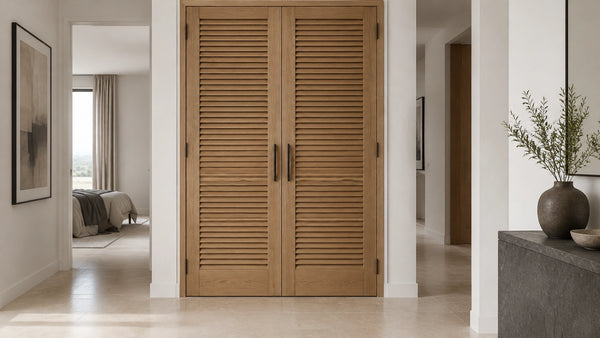
Panel doors add depth through recessed or raised details. Black highlights the geometry and can make a traditional profile feel more contemporary. It is a useful choice when you want the door itself to contribute texture and character, rather than relying on a flat surface.
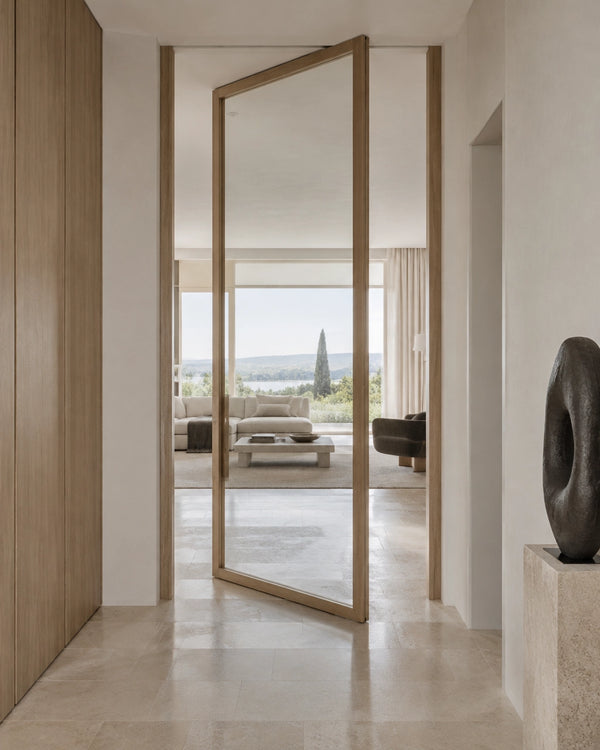
Glass doors combine a dark outline with a view into the next room. Clear glass maintains the strongest visual connection; frosted or textured glass softens the view and offers more privacy. Consider interior doors with glass when you want to define zones without closing off daylight.

Finish affects how a black door responds to light and everyday use. A sample can look different beside a sunlit window than it does in a dim hallway, so assess it in the room where it will be installed.
Before committing, view a sample near the actual wall and floor colors at different times of day. Pay attention to undertones: some blacks appear warmer, while others read cooler or closer to charcoal. Choose the one that supports the room’s materials rather than competing with them.
The strongest combinations usually balance contrast with warmth. A pale wall keeps the door visually crisp, while natural materials (especially wood, woven textiles and stone) soften its impact.

Yes. A black door does not automatically make a small space feel smaller. What matters is how much visual weight you add around it. One dark door against light walls can act as a clear accent; several dark surfaces combined with weak lighting may make a compact room feel enclosed.
Use these practical guidelines:

Think of hardware as a supporting detail, not the main event. The door’s color, profile and position in the room are doing the design work; the hardware should suit that overall composition.
A black lever or pull can keep the surface visually continuous. A warm-metal finish can add a restrained point of contrast, while brushed or satin finishes tend to feel quieter than highly polished ones. Consider the other metal details in view (such as lighting, cabinetry or a nearby mirror) so the finish feels related without needing to match every fixture exactly.
Also consider use and proportion. A small, simple lever often complements a flush door; a more substantial handle may feel appropriate on a larger or more detailed panel. Where possible, review the hardware against a finish sample before ordering.
A few decisions made in the right order can prevent the door from feeling like an afterthought.
Define its purpose.
a. Choose a solid door when privacy and separation matter most.
b. Choose glass when you want to frame a view or maintain a connection between rooms.
Set the visual direction.
a. Choose a flush surface for a minimal, architectural look.
b. Choose panels or texture if you want the door to add detail.
Test the palette in place.
a. Compare the black against the actual wall and flooring.
b. Review samples in daylight and evening light before settling on a finish.
Check the whole opening. Consider the frame, trim, hinge or track, handle, nearby furniture and how the door opens. A well-composed door is the sum of these details, not just the color of the slab.
A: Black is a classic neutral, and its staying power depends on how it is used. Simple profiles, considered proportions and a connection to other details in the room tend to feel more timeless than a door chosen solely to follow a trend.
A: It depends on the look you want. A black frame emphasizes the opening and gives it a more graphic outline; a wall-matched or concealed frame can make the door feel cleaner and less outlined. Consider how the frame relates to the trim and adjacent openings.
A: They can work, but consider how much natural or artificial light the hallway receives. A lighter wall, a reflective surface, or a door with glass can keep the passage from feeling overly enclosed. Test the finish in the actual light before deciding.
A: Pale oak, ash and other light natural finishes create a bright contrast, while walnut and medium wood tones make the palette warmer. Light stone and patterned tile can also work well. Choose based on the room’s overall balance rather than the door alone.
A: Yes. Repeating black across connected rooms can create a consistent architectural rhythm. Vary the door style or use glass selectively where you want to maintain light and sightlines, and make sure the black relates to other details in the home.
Black interior doors work because they bring clarity to a room. They can sharpen an opening, frame a view, or give a quiet wall a more architectural presence. Choose the style according to function, test the finish alongside the real materials in your space, and balance contrast with light and warmth. When those decisions are aligned, black feels less like a bold risk and more like a natural part of the design.
Trade Program
Are You a Trade Professional?
Architects, designers, and contractors receive exclusive pricing and dedicated project support.
Learn About Trade Pricing →Get Started
Our team can help with product selection, sizing, and specification — at no charge.