My shopping cart
Your cart is currently empty.
Continue Shopping
The right pantry door does more than hide shelves. It helps your kitchen function smoothly, protects stored food from everyday conditions, and contributes to the room’s overall design. But the best choice for a spacious kitchen may be impractical in a narrow galley, and a glass door that brightens one pantry may reveal clutter in another.
Start with the layout, not the finish. Consider how people move through the kitchen, where appliances and shelves sit, and whether the pantry needs extra airflow or borrowed light. Then choose a door style that supports those needs while complementing your cabinetry.
A few practical checks can prevent daily annoyances after installation. Before settling on a style, think through the pantry’s opening, interior and surroundings.
In a tight kitchen, even a beautiful door can become a nuisance if it blocks a working area. Sketch the open door, or mark its path with painter’s tape, before you order.
In a narrow galley, preserving a clear aisle usually matters more than the door’s decorative profile. A traditional swinging door can extend into the main walkway or collide with an appliance door. A sliding option may be a better fit, but only if the wall can accommodate it.

A pocket door slides into a cavity inside the wall. Because it doesn’t swing into the kitchen, it can make a narrow approach feel less crowded and keep the floor area in front of the pantry clear.
The trade-off is that installation requires a suitable wall cavity. Plumbing, wiring and other obstructions may make that wall unsuitable, and adding a pocket door can be more involved than replacing a conventional door. Choose a smooth-running track and a recessed pull that’s easy to grip without projecting into the aisle. See pocket door styles for options that suit streamlined interiors.
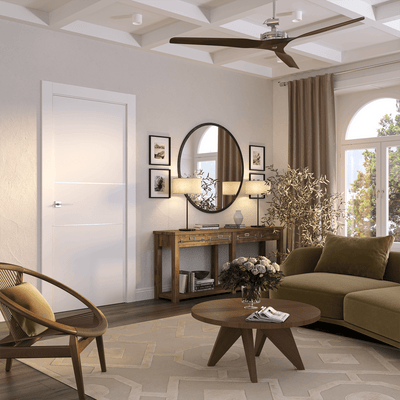
A swing door remains a straightforward choice when there is enough room for its full arc. It offers a familiar feel and closes the pantry behind it, which can help conceal shelves and reduce the sense of visual clutter.
Check both sides of the opening before deciding which way it should swing. An inward swing may take up useful shelf space; an outward swing may obstruct kitchen circulation. If neither direction feels comfortable, a pocket door may better suit your layout. Browse swing door styles for a range of interior options.
A barn-style sliding door can work well when there is a clear stretch of wall beside the pantry opening. It avoids a swing arc and makes the door itself a visible design feature, which can be appealing in an open kitchen or a renovation where changing the wall structure is difficult.
Measure the available wall carefully. The door needs space to slide fully clear of the opening, and the track and handle need room to operate without hitting cabinets, switches or trim. Unlike a door that sits closely within a frame, a surface-mounted sliding door typically has gaps around its edges. That makes it less suitable if you need a close-fitting seal to help control odors, humidity or pests.
Choose this style for its look and its space-saving movement, not as a guaranteed ventilation or sealing solution. Confirm the track and hardware are appropriate for the door’s weight, and make sure the operating pull is comfortable for everyday use.
Glass can share light between the kitchen and pantry, making a compact or windowless pantry entrance feel brighter. Textured, reeded or frosted glass softens the view while still allowing light to pass through. Clear glass offers the most visibility, so it suits a carefully organized pantry where jars, baskets and packaging are part of the design.

Think honestly about what you want to see every day. A glass-front door can make a pantry feel less enclosed, but it also reveals uneven shelves and mixed packaging. If you prefer a calmer kitchen, choose obscured glass or a solid panel instead.
Glass transfers light; it does not replace useful pantry lighting. Add a ceiling fixture or shelf lighting so you can read labels and see items at the back, especially if the pantry is deep. A door-activated light can be a practical extra.
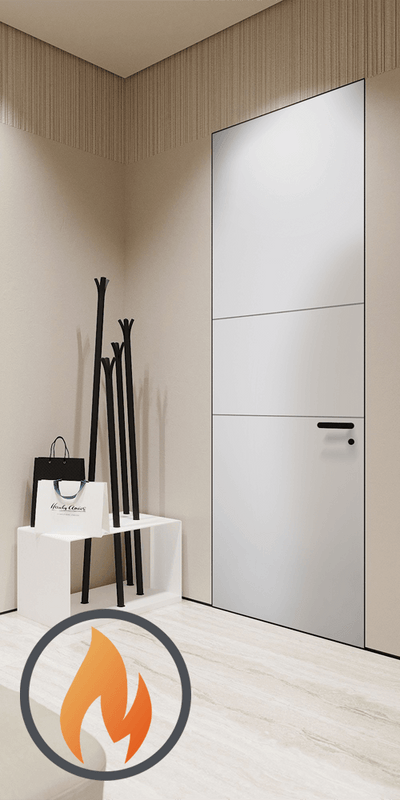
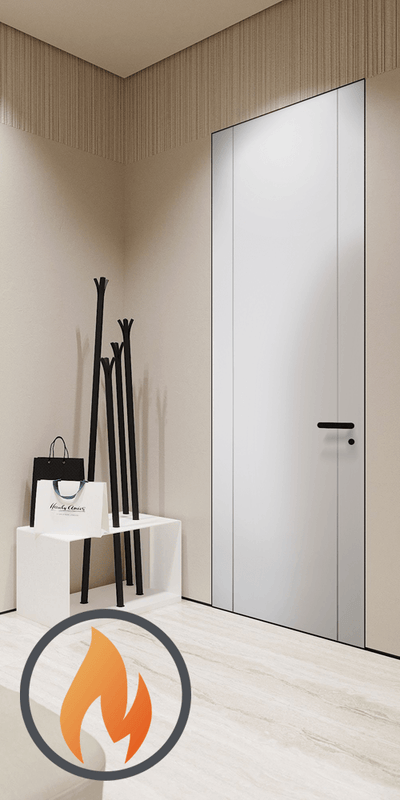
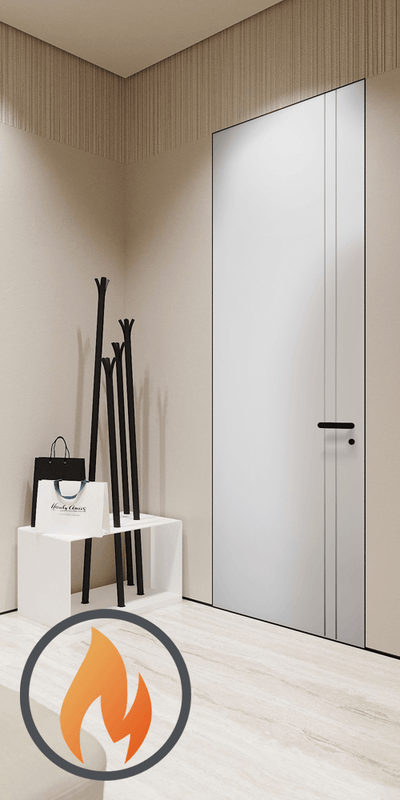
A flush door sits close to the surrounding wall or cabinetry, with a simple, uninterrupted face. A full-height option extends toward the ceiling and can visually align with tall cabinets. Together, these choices create a quiet, architectural look that suits contemporary kitchens and can make the pantry feel intentionally integrated rather than added on.

For the most seamless effect, coordinate the door finish with nearby cabinetry or wall surfaces. A subtle reveal or discreet pull can keep the design restrained without making the door hard to find. If the door is tall or heavy, confirm that the hinges and latch are designed for its size and expected use. Flush detailing should never come at the expense of reliable operation.
Explore modern European interior door styles for ideas that balance clean lines with everyday function.
Not every pantry needs a louvered door. A pantry used for dry goods often does not require a special ventilation system, but the contents and equipment can change the requirements. Heat-producing appliances, a refrigerator or wine cooler, stored compost, and some produce may need an intentional airflow plan.
Follow appliance manufacturers’ clearance and ventilation instructions. A tightly closed pantry door should not conceal an appliance that needs air to operate safely. Depending on the setup, ventilation may involve a grille, an air-transfer path or another solution planned with the kitchen professional. Louvers allow air to move, but they also expose more of the door’s surface to dust and may not suit every design.
For food storage, consider the pantry’s conditions as a whole: keep dry goods away from excessive heat, moisture and direct sunlight, and avoid blocking appliance ventilation. Door style alone cannot correct an overly warm or damp storage area.
Hardware affects comfort, appearance and the way the door operates. Choose it after deciding on the door type, because the right pull depends on whether the door swings, slides into a pocket or travels across the wall.
A finish that coordinates with cabinet pulls, faucets or appliances can help the kitchen feel cohesive. Prioritize a comfortable grip and dependable operation over a decorative detail that is awkward to use.
For a kitchen with generous clearance, a swing door is a practical, familiar option. In a narrow galley, a pocket door can preserve the aisle if the wall allows it. Choose a barn-style slider when you have the necessary wall space and want visible hardware to contribute to the design. Use glass when borrowed light matters and you’re comfortable with some visibility. For an integrated, contemporary look, consider a flush or full-height door that aligns with cabinetry.
Before finalizing the choice, check the door’s movement, nearby appliances, available wall space, lighting and ventilation needs. The best pantry door is the one that makes everyday access easier while fitting naturally into your kitchen.
A: A pocket door is often a good fit when a swing would block the aisle, provided the wall has enough space and no obstructions. A swing door can still work if its opening path is clear.
A: Not always. Requirements depend on what you store and whether the pantry contains appliances that need airflow. Follow appliance instructions and plan ventilation separately when needed.
A: Glass can transfer light from the kitchen into the pantry. Textured or frosted glass softens the view of stored items, while clear glass reveals the shelves more fully.
A: They can be, especially when wall space is available and you want a visible sliding feature. Their perimeter gaps may offer less separation than a close-fitting swing door, so consider whether odor or humidity control matters.
A: Match the hardware to the door’s movement. Use a comfortable lever or pull for a swing door, a recessed pull for a pocket door, and a properly rated track and guide for a sliding door.
Trade Program
Are You a Trade Professional?
Architects, designers, and contractors receive exclusive pricing and dedicated project support.
Learn About Trade Pricing →Get Started
Our team can help with product selection, sizing, and specification — at no charge.


