My shopping cart
Your cart is currently empty.
Continue Shopping
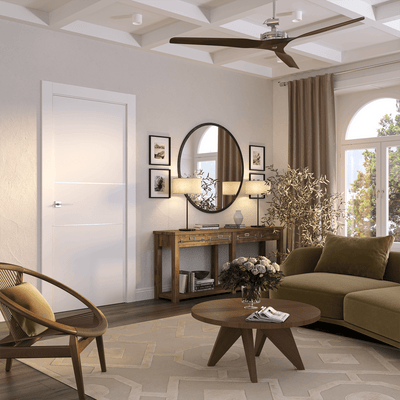
Mid-century modern interiors are known for clean lines, warm natural materials, and a balance of beauty and everyday function. Interior doors are part of that picture. Choose the right style, and a door can quietly support the architecture; choose the wrong details, and the room may feel more like a retro set than a considered home.
The goal is not to recreate a decade room by room. It is to borrow the elements that make the style enduring: simple shapes, expressive wood grain, thoughtful proportions, and hardware that feels purposeful. Whether you are updating one doorway or planning a whole-home renovation, start with the room you have and select a door that belongs in it.
The appeal comes from restraint. Mid-century modern doors generally avoid ornate profiles and elaborate decoration in favor of clean geometry and materials with natural character.
Look for these characteristics:
The style is not a single formula. A plain wood slab can feel authentic, while a restrained glass detail or geometric panel can provide a more expressive interpretation.
The best choice depends on whether you want the door to blend in, become a feature, or improve how the room functions.

A flat-faced door lets wood grain and finish do the visual work. In a hallway with several doorways, using a consistent flush style can make the wall feel more orderly. If you want the door to recede, consider a finish and trim treatment that relate closely to the surrounding surfaces.
For an expressive effect, let the door stand out against a lighter wall. Walnut-colored wood against warm white or soft gray is a classic contrast. Keep other finishes quiet so the door remains the focal point.
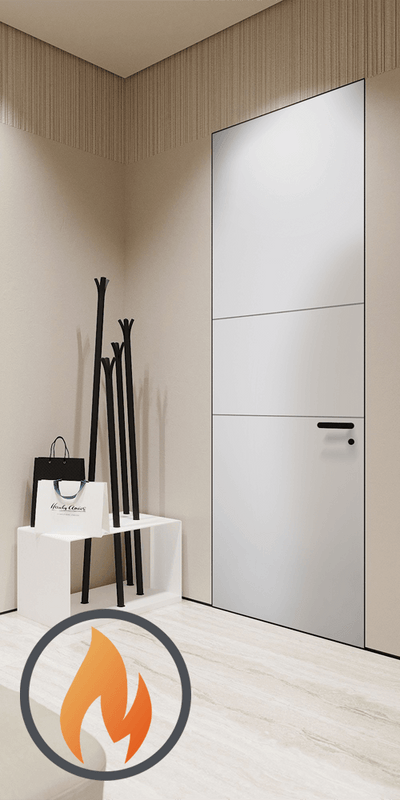
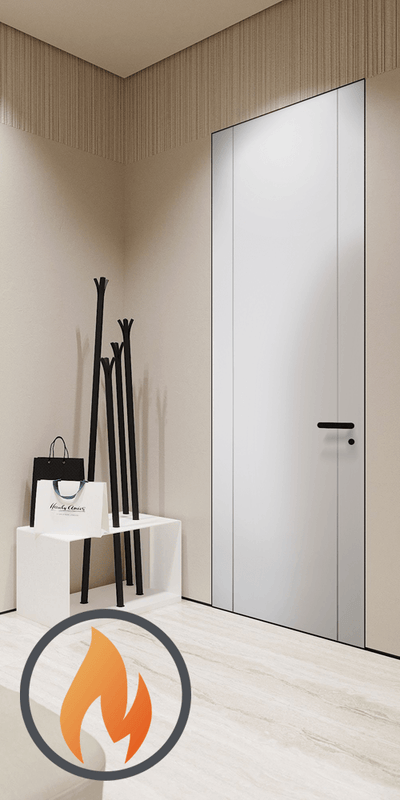
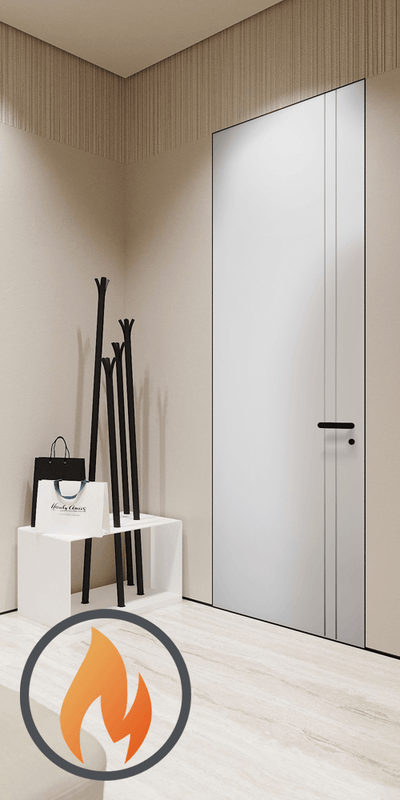
A few simple lines can add character, but more detail is not automatically more period-appropriate. Consider a restrained vertical groove, a balanced rectangular panel arrangement, or a carefully considered grain direction. The design should feel intentional from across the room, not fussy up close.
A glazed door can help daylight travel between rooms while maintaining a visual boundary. Narrow or simply arranged glass panels are often easier to integrate than elaborate patterns.

Textured glass can soften views, but it does not guarantee privacy. Check the glass in the actual setting, ideally in both daytime and evening light, and think about how much visibility the room requires.
A swing door is familiar and often straightforward to install, but it needs room to open. A pocket door slides into the wall and can free up floor area where a swinging leaf would interrupt furniture or circulation. A barn-style door slides along the outside of the wall, though the visible track creates a stronger decorative statement and does not close the opening in the same way as a pocket door.

Choose the operation for the room’s layout first, then assess how its visible hardware and trim fit the design. For more door styles and configurations, see modern European interior doors.
A convincing result comes from connecting the door to the rest of the interior rather than treating it as a standalone vintage accent.
A useful test is to step back and ask whether the door feels related to the home’s lines and materials. If it does, the look is likely to feel settled rather than staged.
A beautiful door still needs to fit the opening and work reliably. Before choosing a replacement, confirm the practical details with your installer or supplier.
If you are keeping the existing door, consider whether refinishing or updating the hardware could achieve the change you want. Preserving a sound original door can maintain continuity and reduce unnecessary replacement.
The most successful mid-century inspired rooms are edited, not overloaded. Watch for these frequent missteps:
A: A flush door with a restrained wood finish is a versatile choice. Simple panels, narrow grooves, or selective glass can also suit the style when they relate to the home’s architecture.
A: Natural-looking grain is a common way to bring warmth and texture to the design. Choose a grain pattern and tone that work with nearby floors and furnishings rather than matching every surface exactly.
A: Yes. Simple glass arrangements can share daylight between rooms while keeping the design clean. Consider sightlines and privacy, and check how the glass looks in the room’s day and evening lighting.
A: They can be a practical choice where a swinging door would use valuable floor space. Confirm that the wall can accommodate the pocket system and that the chosen hardware suits the door’s weight and use.
A: Start by observing the existing trim, proportions, wood finishes, and architectural lines. Select a simple door that complements those details, and keep new hardware and surrounding finishes restrained.
Mid-century modern interior doors work best when they balance character with restraint. Start with the room’s architecture, decide whether the door should blend in or stand out, and choose materials and hardware that support that decision. Careful attention to proportion, operation, and finish will give you a result that feels warm, functional, and timeless, not like a recreation of the past.
Trade Program
Are You a Trade Professional?
Architects, designers, and contractors receive exclusive pricing and dedicated project support.
Learn About Trade Pricing →Get Started
Our team can help with product selection, sizing, and specification — at no charge.


